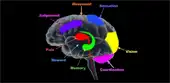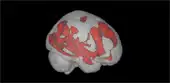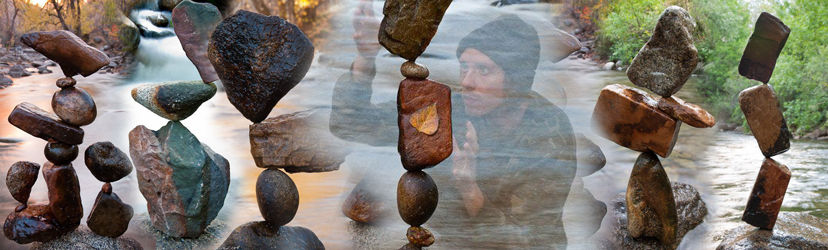
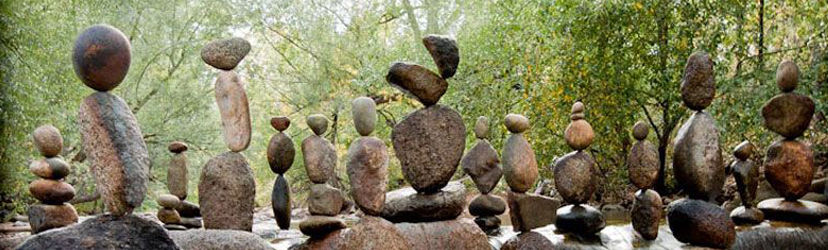
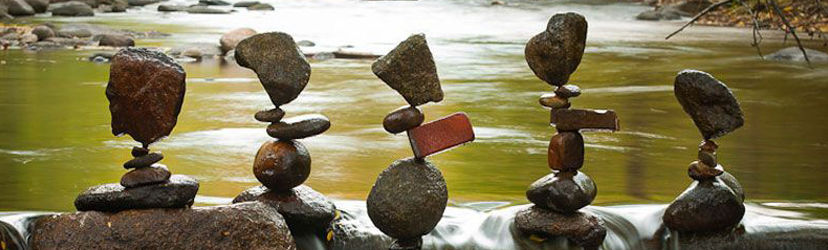

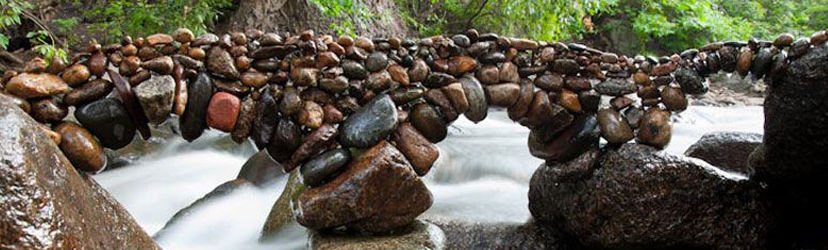
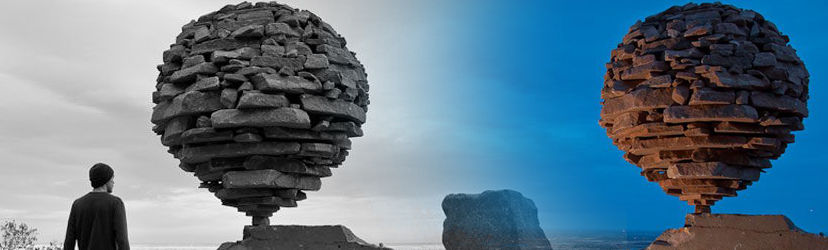
Our research indicates the spiritual and inner peace components of balance deserve far greater study than they receive. Several studies indicate that when practiced regularly they can even reduce the incidence of Alzheimer's disease. We've chosen the "Art of Rock Balancing" to illustrate what can be achieved when mental and physical balance skills are combined. Michael Grab of gravityglue.com is an artist who has been Rock Balancing since 2008. He says:
"The fundamental element of balancing in a physical sense is finding some kind of 'tripod' for the rock to stand on. Every rock is covered in a variety of tiny to large indentations that can act as a tripod for the rock to stand upright. By paying close attention to the feeling of the rocks, you will start to feel even the smallest clicks as the notches of the rocks in contact are moving over one another. The most fundamental non-physical element is harder to explain through words. In a nutshell, I am referring to meditation, or finding a zero point or silence within yourself. Some balances can apply significant pressure on your mind and your patience. The challenge is overcoming any doubt that may arise."
THE PHYSICAL BENEFITS OF BALANCE

According to the Centers for Disease Control and Prevention in Atlanta, unintentional falls cause more than 18,000 deaths and nearly 450,000 hospitalizations per year in the United States. It is an even greater problem in many countries throughout the world. The vast majority of these incidents take place among people over the age of 65, but it is incorrect to assume younger people aren't at risk too. The evidence is increasingly clear that our balance skills begin to decline long before we reach old age and good balance is easier to maintain than it is to relearn. The good news about balance is it can be improved with proper training regardless of how old you are.
Improved balance will not only extend your life it will improve the quality of your life as well. Many of life's most pleasurable activities require good balance skills. Skiing, snow and water, hiking, basketball, skating in all of its forms, any activity that requires a ladder, anything involving your motor skills in slippery or uneven terrain and many more all require good balance if you want to perform them well and reduce the risk of injury. Another word for balance is coordination and we all know how important that can be...almost all serious athletes include balance training as a part of their routines.
The reason making a conscious effort to include activities that address balance in your exercise routine is because the ability to remain upright and sure-footed requires several complex components of the nervous system and motor movement functions to remain in tact. According to neurologist Dr. David Thurman, a spokesman for the American Academy of Neurology, these include the inner ear, vision, the ability to sense where one's arms, legs and other parts of the body are without looking at them...as well as maintaining the strength and flexibility of bones and soft tissue. Dr. Thurman says, "The preponderance of evidence shows fairly convincingly that strength and balance training can reduce falls by up to 50%."
By far the best way to avoid losing our balance is to maintain that skill, so we don't have to deal with the challenges of getting it back late in life. There are many exercise classes and Pilates studios available where balance training is a priority. Tai Chi can be a very effective way to improve your balance as well. The good news according to Dr. Thurman is, "the nervous system has considerably more regenerative capacity into our senior years than we used to think, the capacity to adjust, compensate and even develop new skills remains there." Tom LeDuc